
Women Are More Dehydrated Than Men — But Not for the Reasons You Think
Women's Health
Women Are More Dehydrated Than Men — But Not for the Reasons You Think
Simrath Sehmi 06.05.2026

We’ve been taught to think about hydration in very simple terms; drink more water, be less dehydrated. And, if you feel tired, foggy, or headachy, the assumption is usually that you’re just not drinking enough. 

But that explanation starts to fall apart when you look more closely at women. Because in women, hydration isn’t just about how much you drink. It’s about how your body regulates fluid in the first place. Most women aren’t dramatically under-consuming water – in fact, we’d argue that they’re generally nailing their hydration stations better than most. What’s happening instead is that fluid balance is governed by physiological factors that are sex specific; it’s hormonally driven, which mkes electrolyte regulation is less stable across time. 

The result isn’t simply dehydration - it’s variability. You can be doing the exact same thing, drinking the same amount, following the same routine and feel completely different from one week to the next. Here’s what you need to know.  

Hydration Change Across Your Cycle  

Hydration is not static across the menstrual cycle; it shows measurable shifts in response to hormonal changes. 

As oestrogen rises, it lowers the threshold at which your body begins to conserve water. In practical terms, this means your body starts holding onto fluid earlier than it otherwise would. Research has shown that oestrogen shifts both thirst and vasopressin - the hormone responsible for regulating water retention - so that these systems activate at lower levels of plasma osmolality. (1) 

In the second half of your cycle, progesterone takes the lead and once again changes how your body handles minerals. 

Progesterone competes with aldosterone, the hormone that normally tells your kidneys to hold onto sodium. By blocking aldosterone at its receptor, progesterone tips the balance the other way: more sodium is flushed out in your urine. (2) But in practice, sodium is rarely the missing piece. Most of us in the UK eat well above the recommended daily intake, so the raw material is there. (5) Magnesium, however, is a different story; national diet survey data shows that women across every age group in the UK fall short of the reference intake. (6) This is important because magnesium gets caught in the same hormonal shift. Levels of active magnesium in your blood drop as progesterone rises, and progesterone also increases how much magnesium you excrete through urine. (4) So, at exactly the point in your cycle when your cells need more (for energy, mood, and muscle function) you're holding onto less of what was already in short supply. 

This is part of why so many women feel the luteal phase in their body: more bloating, more cravings, more fatigue, more restless sleep. And while you can't out-supplement a hormonal cycle, you can stop running a deficit on the one mineral your body keeps asking for and rarely getting enough of through the right type of electrolyte support.  

Layer onto this the rise in core body temperature during the luteal phase, and you’re left with a system that is constantly adjusting - holding onto more water at certain points, losing more electrolytes at others, and not always keeping those two in sync. Hydration, across the month, becomes less of a steady state and more of a moving target.  

Perimenopause 

For many women, these dynamics become more noticeable during perimenopause. Not because they suddenly start drinking less water, but because the regulatory system itself becomes less stable. 

As oestrogen levels decline, the body loses some of its ability to finely tune fluid balance. Vasopressin responses shift, and thirst signals become less reliable. While the body still responds to changes in blood concentration, its sensitivity to changes in blood volume becomes reduced. (7) 

Research has shown that although osmotic thirst mechanisms are largely preserved with age, the ability to detect and respond to reductions in blood volume is diminished. In practical terms, this means the body becomes slower and less accurate at recognising when it needs fluid. (7) 

What this often looks like is a sense that hydration has become harder to “get right.” Water intake may not produce the same effect it once did. Fatigue may linger, and rehydration may feel less efficient.  

The Baseline Difference Most People Ignore 

Even before hormones are considered, there is a fundamental physiological difference that shapes hydration in women. 

On average, women have a lower total body water percentage than men. This is largely due to differences in body composition - specifically, lower lean mass and higher fat mass, both of which influence how much water the body can store. (9) 

Research shows that total body water is typically around 5–10% lower in women. While this may seem like a small difference, it has meaningful physiological implications. (9) 

A smaller fluid reserve means there is less buffer against fluid loss. Shifts into dehydration can happen more quickly, and smaller imbalances can have a more noticeable effect. In other words, the same conditions and behaviours do not produce identical outcomes. (9) 

Women are not worse at hydrating, nor are they simply failing to drink enough water. They are operating within a system that is more hormonally dynamic, more sensitive to electrolyte balance, and less stable across time. Hydration, in this context, is not a fixed target that can be met with a single rule or number. 

More often, it’s that hydration was never just about water in the first place. 

Disclaimer: The information presented in this article is for educational purposes only and is not intended to diagnose, prevent, or treat any medical or psychological conditions. The information is not intended as medical advice, nor should it replace the advice from a doctor or qualified healthcare professional. Please do not stop, adjust, or modify your dose of any prescribed medications without the direct supervision of your healthcare practitioner.

References

  1. Stachenfeld NS. Sex hormone effects on body fluid regulation. Exerc Sport Sci Rev. 2008 Jul;36(3):152-9. doi: 10.1097/JES.0b013e31817be928. PMID: 18580296; PMCID: PMC2849969. 

  1. Giersch G.E.W., Morrissey M.C., et al. Fluid balance and hydration considerations for women: Review and future directions. Sports Medicine. 2020. https://pubmed.ncbi.nlm.nih.gov/31641955/ 

  1. Rodriguez-Giustiniani, P., Rodriguez-Sanchez, N. and Galloway, S.D.R. (2022), Fluid and electrolyte balance considerations for female athletes. European Journal of Sport Science, 22: 697-708. https://doi.org/10.1080/17461391.2021.1939428 

  1. Feher, J. (2017). 7.6 - Regulation of Fluid and Electrolyte Balance. In Quantitative Human Physiology (pp. 740–751). Elsevier. https://doi.org/10.1016/b978-0-12-800883-6.00074-4 

  1. Charkoudian N, Lee JKW, Giersch GEW, DiPietro L, Stachenfeld N. Different perspectives on women's health, nutrition and endurance exercise. J Int Soc Sports Nutr. 2023 Dec;20(1):2286286. doi: 10.1080/15502783.2023.2286286. Epub 2023 Nov 29. PMID: 38018805; PMCID: PMC11018311. 

  1. Stachenfeld NS. Hormonal changes during menopause and the impact on fluid regulation. Reprod Sci. 2014 May;21(5):555-61. doi: 10.1177/1933719113518992. Epub 2014 Feb 3. PMID: 24492487; PMCID: PMC3984489. 

  1. P. Ritz, S. Vol, G. Berrut, I. Tack, M.J. Arnaud, J. Tichet, 

  1. Influence of gender and body composition on hydration and body water spaces,Clinical Nutrition, Volume 27, Issue 5, 2008, Pages 740-746, ISSN 0261-5614, https://doi.org/10.1016/j.clnu.2008.07.010. 


We’ve been taught to think about hydration in very simple terms; drink more water, be less dehydrated. And, if you feel tired, foggy, or headachy, the assumption is usually that you’re just not drinking enough. 

But that explanation starts to fall apart when you look more closely at women. Because in women, hydration isn’t just about how much you drink. It’s about how your body regulates fluid in the first place. Most women aren’t dramatically under-consuming water – in fact, we’d argue that they’re generally nailing their hydration stations better than most. What’s happening instead is that fluid balance is governed by physiological factors that are sex specific; it’s hormonally driven, which mkes electrolyte regulation is less stable across time. 

The result isn’t simply dehydration - it’s variability. You can be doing the exact same thing, drinking the same amount, following the same routine and feel completely different from one week to the next. Here’s what you need to know.  

Hydration Change Across Your Cycle  

Hydration is not static across the menstrual cycle; it shows measurable shifts in response to hormonal changes. 

As oestrogen rises, it lowers the threshold at which your body begins to conserve water. In practical terms, this means your body starts holding onto fluid earlier than it otherwise would. Research has shown that oestrogen shifts both thirst and vasopressin - the hormone responsible for regulating water retention - so that these systems activate at lower levels of plasma osmolality. (1) 

In the second half of your cycle, progesterone takes the lead and once again changes how your body handles minerals. 

Progesterone competes with aldosterone, the hormone that normally tells your kidneys to hold onto sodium. By blocking aldosterone at its receptor, progesterone tips the balance the other way: more sodium is flushed out in your urine. (2) But in practice, sodium is rarely the missing piece. Most of us in the UK eat well above the recommended daily intake, so the raw material is there. (5) Magnesium, however, is a different story; national diet survey data shows that women across every age group in the UK fall short of the reference intake. (6) This is important because magnesium gets caught in the same hormonal shift. Levels of active magnesium in your blood drop as progesterone rises, and progesterone also increases how much magnesium you excrete through urine. (4) So, at exactly the point in your cycle when your cells need more (for energy, mood, and muscle function) you're holding onto less of what was already in short supply. 

This is part of why so many women feel the luteal phase in their body: more bloating, more cravings, more fatigue, more restless sleep. And while you can't out-supplement a hormonal cycle, you can stop running a deficit on the one mineral your body keeps asking for and rarely getting enough of through the right type of electrolyte support.  

Layer onto this the rise in core body temperature during the luteal phase, and you’re left with a system that is constantly adjusting - holding onto more water at certain points, losing more electrolytes at others, and not always keeping those two in sync. Hydration, across the month, becomes less of a steady state and more of a moving target.  

Perimenopause 

For many women, these dynamics become more noticeable during perimenopause. Not because they suddenly start drinking less water, but because the regulatory system itself becomes less stable. 

As oestrogen levels decline, the body loses some of its ability to finely tune fluid balance. Vasopressin responses shift, and thirst signals become less reliable. While the body still responds to changes in blood concentration, its sensitivity to changes in blood volume becomes reduced. (7) 

Research has shown that although osmotic thirst mechanisms are largely preserved with age, the ability to detect and respond to reductions in blood volume is diminished. In practical terms, this means the body becomes slower and less accurate at recognising when it needs fluid. (7) 

What this often looks like is a sense that hydration has become harder to “get right.” Water intake may not produce the same effect it once did. Fatigue may linger, and rehydration may feel less efficient.  

The Baseline Difference Most People Ignore 

Even before hormones are considered, there is a fundamental physiological difference that shapes hydration in women. 

On average, women have a lower total body water percentage than men. This is largely due to differences in body composition - specifically, lower lean mass and higher fat mass, both of which influence how much water the body can store. (9) 

Research shows that total body water is typically around 5–10% lower in women. While this may seem like a small difference, it has meaningful physiological implications. (9) 

A smaller fluid reserve means there is less buffer against fluid loss. Shifts into dehydration can happen more quickly, and smaller imbalances can have a more noticeable effect. In other words, the same conditions and behaviours do not produce identical outcomes. (9) 

Women are not worse at hydrating, nor are they simply failing to drink enough water. They are operating within a system that is more hormonally dynamic, more sensitive to electrolyte balance, and less stable across time. Hydration, in this context, is not a fixed target that can be met with a single rule or number. 

More often, it’s that hydration was never just about water in the first place. 

Disclaimer: The information presented in this article is for educational purposes only and is not intended to diagnose, prevent, or treat any medical or psychological conditions. The information is not intended as medical advice, nor should it replace the advice from a doctor or qualified healthcare professional. Please do not stop, adjust, or modify your dose of any prescribed medications without the direct supervision of your healthcare practitioner.

References

  1. Stachenfeld NS. Sex hormone effects on body fluid regulation. Exerc Sport Sci Rev. 2008 Jul;36(3):152-9. doi: 10.1097/JES.0b013e31817be928. PMID: 18580296; PMCID: PMC2849969. 

  1. Giersch G.E.W., Morrissey M.C., et al. Fluid balance and hydration considerations for women: Review and future directions. Sports Medicine. 2020. https://pubmed.ncbi.nlm.nih.gov/31641955/ 

  1. Rodriguez-Giustiniani, P., Rodriguez-Sanchez, N. and Galloway, S.D.R. (2022), Fluid and electrolyte balance considerations for female athletes. European Journal of Sport Science, 22: 697-708. https://doi.org/10.1080/17461391.2021.1939428 

  1. Feher, J. (2017). 7.6 - Regulation of Fluid and Electrolyte Balance. In Quantitative Human Physiology (pp. 740–751). Elsevier. https://doi.org/10.1016/b978-0-12-800883-6.00074-4 

  1. Charkoudian N, Lee JKW, Giersch GEW, DiPietro L, Stachenfeld N. Different perspectives on women's health, nutrition and endurance exercise. J Int Soc Sports Nutr. 2023 Dec;20(1):2286286. doi: 10.1080/15502783.2023.2286286. Epub 2023 Nov 29. PMID: 38018805; PMCID: PMC11018311. 

  1. Stachenfeld NS. Hormonal changes during menopause and the impact on fluid regulation. Reprod Sci. 2014 May;21(5):555-61. doi: 10.1177/1933719113518992. Epub 2014 Feb 3. PMID: 24492487; PMCID: PMC3984489. 

  1. P. Ritz, S. Vol, G. Berrut, I. Tack, M.J. Arnaud, J. Tichet, 

  1. Influence of gender and body composition on hydration and body water spaces,Clinical Nutrition, Volume 27, Issue 5, 2008, Pages 740-746, ISSN 0261-5614, https://doi.org/10.1016/j.clnu.2008.07.010. 


FEATURED IN THIS ARTICLE

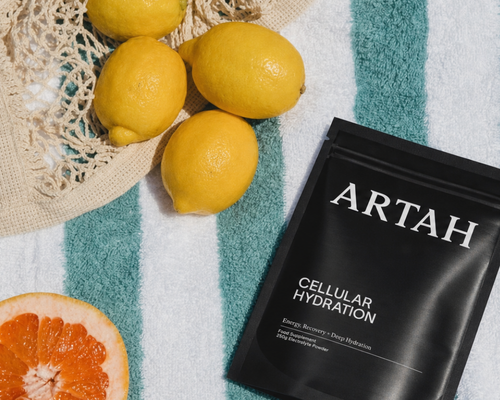
Cellular Hydration
From £32.00

ultimate support for energy, metabolism + collagen

An electrolyte powder blended with botanical powerhouses, Cellular Hydration is great for energy, focus, emotional wellbeing and more. Complete with high dose Peruvian Maca and…

Benefits

Unlock better energy
Reduce fatigue
Recover faster
Support Collagen Production
Natural tart-lemon flavour
Boost focus
Shop now
Cellular Hydration
Cellular Hydration
Cellular Hydration
Cellular Hydration