




Your Anti-Inflammatory Toolkit
Inflammation isn’t just shaped by what we eat, it’s also influenced by how we live. Daily habits around stress, sleep, movement, and connection all send signals to the body, which can either calm the pathways involved in inflammation or amplify them.
An anti-inflammatory lifestyle is less about perfection and more about creating patterns that allow the body to reset, repair, and regulate. Think of it as a toolkit: each practice is a tool to reduce low-grade inflammation, support energy, stabilise mood, and protect long-term health. Here are some of our favourite anti-inflammatory tools and practices to get you going.
Vagus Nerve Work
-
Why? The vagus nerve acts as the body’s inflammation dial, calming immune activity when tone is high.
-
Research shows vagal stimulation directly reduces pro-inflammatory cytokines: think humming, gargling, slow breathing, and cold exposure stimulate the vagus and shift the body into rest and repair. (5)
Oral Health
-
Why? Oral inflammation often reflects systemic inflammation, and we now know that gum disease and poor hygiene raise CRP and other inflammatory markers. (6)
-
Brush, floss, oil pull, and maintain regular dental care - these small daily habits that help lower total inflammatory load.
Lymphatic Drainage
-
Why? The lymphatic system clears waste and inflammatory byproducts but needs movement to function. When it slows, toxins accumulate and inflammation rises. (7)
-
Walking, stretching, rebounding, massage, and manual drainage support healthy flow and immune balance.
-
We love the Sculpting Body Gua Sha for an easy but impactful daily glow up ritual.
Chrono-Fast / Time-Restricted Eating
-
Why? Timing matters as much as nutrition quality. Constant grazing keeps insulin high and limits repair. Time-restricted eating improves insulin sensitivity and reduces inflammation by giving the body metabolic rest. (8)
-
Keep a consistent overnight fasting window - front-load the day with protein, fibre, and fat, and go lighter at night. If you’re looking for a boost to reset, try the Chrono-reset, our 7-day circadian cleanse.
Heat + Cold Therapy
-
Why? Controlled exposure to heat and cold trains resilience and supports inflammation balance.
-
Sauna use has been shown to lower cardiovascular and inflammatory risk; whilst cold therapy enhances immune and stress adaptability. (9,10)
-
The key is consistency and moderation - small, regular doses to help regulate, not aggravate.
Reducing Air Pollution
-
Why? Air quality directly affects inflammation; fine particulate matter (PM2.5) increases oxidative stress, CRP, and systemic inflammation. (11)
-
Ventilation, high-quality air filters, and time in clean-air environments can help reduce this hidden inflammatory load.
Sleep
-
Why? Sleep is one of the body’s most powerful anti-inflammatory tools. During restorative sleep, tissues have a chance to repair the body can balance inflammation. Disrupted sleep, on the other hand, raises CRP and systemic inflammation. (2)
-
Protect rest with a calm bedtime routine, consistent hours, and a cool, dark environment.
- Poor sleep is one of the fastest ways to drive up inflammation.
Smart Movement
-
Why? Movement has an enormous influence on inflammation - overtraining without recovery amplifies it, while balanced exercise restores.
-
Steady state cardio, resistance training, mobility work, and mindful movement (yoga, tai chi) support circulation and lower inflammatory signalling. (3)
-
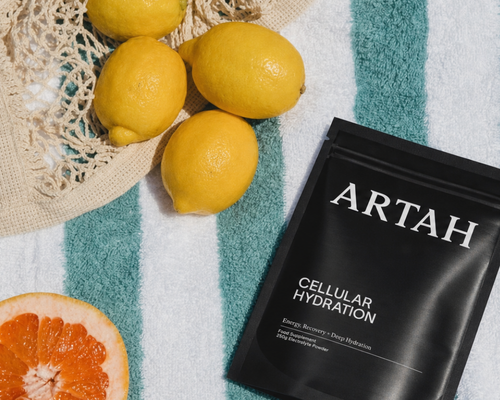
Move to energise and regulate, not to exhaust. For expert recovery support, we love the Strength + Hydration Stack, which combines best-sellers Essential Creatine + Cellular Hydration.
Connection
-
Why? Believe it or not, social connection has been shown to soothe inflammation and stabilises immune function. Supportive relationships lower cortisol and reduce markers like CRP and IL-6. (4)
-
Time with loved ones - laughter, shared meals, conversation - builds both emotional and biological resilience.
Stress Management
-
Why? Chronic stress fuels inflammation. Elevated cortisol disrupts the gut barrier, heightens immune reactivity, and drives oxidative stress.
-
Managing stress helps cool the body’s internal fire and restore balance.
-
Meditation, deep breathing, and yoga lower CRP and IL-6. (1)
-
Even a brief daily ritual or time in nature helps reset the system and ease the strain stress creates.
- Chronic stress raises cortisol and drives oxidative stress over time. Enhanced Nootropics contains magnesium glycinate, ashwagandha, and B6+B12 to support normal psychological function and reduce tiredness and fatigue.
NSDR (Non-Sleep Deep Rest)
-
Why? NSDR practices like yoga nidra and guided rest help calm the nervous system.
-
They’ve been shown to lower sympathetic drive, enhance parasympathetic tone, and reduce CRP, IL-6, and TNF-α.(12)
-
In a world that keeps us “on,” NSDR offers a structured way to decompress and restore – even better, it’s super relaxing and easy to fit into even the busiest schedules.

Disclaimer: The information presented in this article is for educational purposes only and is not intended to diagnose, prevent, or treat any medical or psychological conditions. The information is not intended as medical advice, nor should it replace the advice from a doctor or qualified healthcare professional. Please do not stop, adjust, or modify your dose of any prescribed medications without the direct supervision of your healthcare practitioner.
References
-
Djalilova DM, Schulz PS, Berger AM, Case AJ, Kupzyk KA, Ross AC. Impact of Yoga on Inflammatory Biomarkers: A Systematic Review. Biol Res Nurs. 2019 Mar;21(2):198-209. doi: 10.1177/1099800418820162. Epub 2018 Dec 20. PMID: 30572710; PMCID: PMC6700894.
-
Meier-Ewert H, Ridker P, Rifai N, Regan M, Price N, Dinges D, Mullington J. Effect of sleep loss on C-reactive protein, an inflammatory marker of cardiovascular risk. J Am Coll Cardiol. 2004;43(4):678–83.
-
Shu C, Feng S, Cui Q, Cheng S, Wang Y. Impact of Tai Chi on CRP, TNF-alpha and IL-6 in inflammation: a systematic review and meta-analysis. Ann Palliat Med. 2021 Jul;10(7):7468-7478. doi: 10.21037/apm-21-640. PMID: 34353036.
-
Klinedinst TC, Hollman N, Hankes MJ, Jones R. Linking Social Cohesion to Biological Markers of Aging: Evidence From the National Health and Aging Trends Study. J Appl Gerontol. 2025 Dec;44(12):1907-1912. doi: 10.1177/07334648251325623. Epub 2025 Mar 13. PMID: 40083174; PMCID: PMC12268888.
-
Falvey A. Vagus nerve stimulation and inflammation: expanding the scope beyond cytokines. Bioelectron Med. 2022 Dec 1;8(1):19. doi: 10.1186/s42234-022-00100-3. PMID: 36457107; PMCID: PMC9714105.
-
Luo H, Wu B, Kamer AR, Adhikari S, Sloan F, Plassman BL, Tan C, Qi X, Schwartz MD. Oral Health, Diabetes, and Inflammation: Effects of Oral Hygiene Behaviour. Int Dent J. 2022 Aug;72(4):484-490. doi: 10.1016/j.identj.2021.10.001. Epub 2021 Nov 29. PMID: 34857389; PMCID: PMC9259379.
-
Schwager S, Detmar M. Inflammation and Lymphatic Function. Front Immunol. 2019 Feb 26;10:308. doi: 10.3389/fimmu.2019.00308. PMID: 30863410; PMCID: PMC6399417.
-
Turner L, Charrouf R, Martínez-Vizcaíno V, Hutchison A, Heilbronn LK, Fernández-Rodríguez R. The effects of time-restricted eating versus habitual diet on inflammatory cytokines and adipokines in the general adult population: a systematic review with meta-analysis. Am J Clin Nutr. 2024 Jan;119(1):206-220. doi: 10.1016/j.ajcnut.2023.10.009. Epub 2023 Oct 20. PMID: 37865184.
-
Kunutsor SK, Laukkanen T, Laukkanen JA. Longitudinal associations of sauna bathing with inflammation and oxidative stress: the KIHD prospective cohort study. Ann Med. 2018 Aug;50(5):437-442. doi: 10.1080/07853890.2018.1489143. Epub 2018 Jul 24. PMID: 29897261.
-
Zwaag J, Naaktgeboren R, van Herwaarden AE, Pickkers P, Kox M. The Effects of Cold Exposure Training and a Breathing Exercise on the Inflammatory Response in Humans: A Pilot Study. Psychosom Med. 2022 May 1;84(4):457-467. doi: 10.1097/PSY.0000000000001065. Epub 2022 Feb 23. PMID: 35213875; PMCID: PMC9071023.
-
Sangaramoorthy M, Yang J, Tseng C, Wu J, Ritz B, Larson TV, Fruin S, Stram DO, Park SL, Franke AA, Wilkens LR, Samet JM, Le Marchand L, Shariff-Marco S, Haiman CA, Wu AH, Cheng I. Particulate matter, traffic-related air pollutants, and circulating C-reactive protein levels: The Multiethnic Cohort Study. Environ Pollut. 2023 Sep 1;332:121962. doi: 10.1016/j.envpol.2023.121962. Epub 2023 Jun 3. PMID: 37277070; PMCID: PMC10870935.
-
Mishra B, Agarwal A, George JA, Upadhyay AD, Nilima N, Mishra R, Kuthiala N, Basheer A, Vishnu VY, Srivastava VP. Effectiveness of Yoga in Modulating Markers of Immunity and Inflammation: A Systematic Review and Meta-Analysis. Cureus. 2024 Apr 3;16(4):e57541. doi: 10.7759/cureus.57541. PMID: 38707001; PMCID: PMC11068076.


