





Farzanah is a registered Nutritionist and certified Functional Medicine practitioner specialising in gut and immune health. She is the author of The Everyday High Fibre Plan and works with clients to support their health and to build sustainable, evidence-based wellbeing habits. Today she’s sharing what she prioritises for longevity, simple ways to eat healthier, and her ultimate Bolognaise hack.
Q: For those who may not know you, tell us a little about your work and why you wanted to write your new book?
I’m a registered Nutritionist and a certified Functional Medicine practitioner specialising in gut and immune health. I had my fair share of health challenges in my 20’s (burnout, an ulcer, an autoimmune condition; psoriasis and hormone imbalance, PCOS, which made me want to go back to school and retrain. Along the way I managed to reverse my diagnoses and bring my psoriasis into remission. I now work with clients to help support them on their journeys. There are a few core principles that can make a huge difference to health and are accessible to everyone and so I wanted to write a book to share them and illustrate how it can be made simple. I focus on fibre, the ultimate superfood, and talk about how to eat, the importance of colour and the way you combine your meals.
Q: When it comes to fibre, what do you think most people misunderstand?
Most people think it’s brown, boring, bland and just needed for a daily bowel movement. It is so much more than that and in real need of a rebrand. As humans we don’t have the ability to breakdown fibre but our gut microbiome, that are pivotal to health and wellbeing, do and create anti-inflammatory compounds called shorty chain fatty acids (SCFA) aka postbiotics. SCFA are the number one way to heal a leaky gut and they can improve energy, mood, support skin health, help with hormones and can even lower your biological age, the ultimate longevity hack. I’m not sure there is an area of health they do not support.
Q: What does “feeling good” actually mean to you - personally and professionally?
For me, feeling good isn’t about chasing perfection or constant productivity but it’s about feeling calm, energised and present in my own life. Waking up with steady energy, having good digestion, sleeping well, and feeling emotionally balanced. It’s being able to spend time with the people I love and move through my day without feeling overwhelmed or depleted.
Q: What are two non-negotiable habits you have that are key to supporting your health and wellbeing?
First, it would be prioritising gut health. I make sure my meals contains fibre-rich, colour and fermented foods. it’s the foundation of my energy, mood, immunity and long-term health. Second would be protecting my sleep and recovery. I’m very intentional about winding down in the evenings, limiting screens, and creating a calm bedtime routine. Good sleep is when the body repairs and resets. Just like your phone needs to charge overnight to work the next day, we too need to sleep to recharge so we have energy for the next day.
Q: What’s a common challenge you see people facing when they're trying to eat a healthier diet?
Trying to do too much too quickly.
Start small and be consistent. If you can stack new habits to what you are already doing that can make it even easier. For example if you are looking to eat more fibre start with just one new food every few days. Choose something you like and add it to your meals, for example blueberries, add them to whatever you are having for breakfast, a porridge yoghurt bowl or a smoothie. Once you are consistent then pick another food.
Q: If someone wanted to feel better starting this week, what’s one small change you’d suggest?
Start with breakfast. Tweak what you are already eating by:
- Making sure its blood sugar balanced (has fibre, protein and healthy fats)
- Contains fibre
- Has some colour
Q: What are your go to ARTAH supplements?
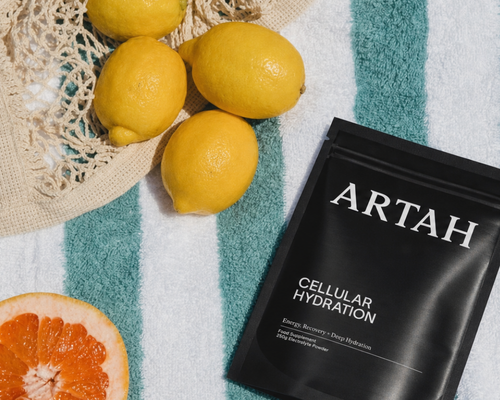
I love so many of them…! First is Enhanced NAD+ Complex - I feel like I am recommending this daily to both clients and friends. Not only does it have NAD precursors but also NAD boosters that are in clinical effective doses to help support other areas of health too. For example, saffron can also be great for good mood, Quercetin is a natural antioxidant, anti-inflammatory and mast cell stabiliser, pine bark is great for vascular health and something many people can benefits form especially is the premenopausal transition when NAD is so helpful. It’s magic.
Cellular Defence - it has everything I want to take to help support my immune system in nice doses. My kids all have this with them, and I stocked my son up with this when he left for uni. It’s my go to always and travel with it too.
Q: What does a day of food look like for you? Any favourite, quick meals that you always come back to?
I’m a creature of habit and I tend to stick to the same base meals but just make small changes. Takes away the decision fatigue and makes it speedy.
Breakfast: Yogurt or porridge bowl every morning. Base of oats, ground flax, chia, shelled hemp, walnuts with yoghurt and kefir and then will change it up by adding different seasonal fruits
Lunch: Same base of greens, beans, precooked beetroot and then switch the protein: tofu, tinned sardines, frozen wild salmon. All store cupboard staples
Dinner: This is what the kids want to eat and then I like to secretly add ingredients into the meal to make them more nutrient dense. Bolognese is a regular in the house and I make it even healthier by adding blended shiitake mushrooms for immune health, liver for a nutrient boost (you cannot taste it!), and lentils for additional fibre.
Q: Looking back, is there anything you wish you’d known sooner about an aspect of health or wellbeing?
Yes absolutely. I wish I’d understood earlier how powerful small, consistent habits really are and that you don’t need a complete overhaul.
For a long time, like many women, I thought health meant extremes, strict plans, cutting foods out, or trying to be ‘perfect’ What I’ve learned is that sustainable health comes from gentle, daily choices; eating more plants, managing stress, moving regularly, and being kind to yourself. I also wish I’d known sooner that gut health affects almost everything, from digestion and immunity to mood, sleep and energy. Once I understood that, it completely changed how I approached my own wellbeing and my work with clients.
Quickfire Questions:
Coffee or wine? Coffee!
Favourite book? Nutriton: Good energy, Dr Casey Means. Personal: The Forty Rules of Love, Elif Shafak.
What you're watching right now? I don’t really watch much TV but I binge watched Stranger Things with my kids over the Christmas holidays!
Favourite sweet treat: cookies and brownies (have some great recipes in the book!)
Favourite high fibre food? Dark chocolate + raspberries
Favourite workout? Yoga
Wellness tool you couldn't live without? my PEMF mat / red light therapy
Where can our community find you? Follow Farzanah: @Farzanahnasser_nutriiton
Get her book: https://amzn.to/4rBUjZm


